

 English



-
Client Profile: Flexible Printed Circuit (FPC) Manufacturer
-
Application: High-speed UV curing for FPC coverlay (cover layer) pressing and edge-sealing
-
The Challenge: Thermal damage to delicate polyimide (PI) substrates, uneven curing, and slow production throughput using traditional mercury lamps.
-
The Solution: Custom Shenzhen Super- curing Opto-Electronic CO., Ltd High-Intensity UV LED Curing System
-
Key Results: 40% increase in production line speed, 0% substrate warping, and a 70% reduction in energy consumption.
As consumer electronics trend toward thinner, lighter, and more foldable designs, the demand for Flexible Printed Circuits (FPCs) has skyrocketed. A critical step in FPC manufacturing is the application of the coverlay—a protective layer that shields the delicate copper circuitry.
Our client, a leading automotive electronics and smartphone component supplier, was facing severe bottlenecks in their coverlay bonding process.
FPC substrates are incredibly thin and heat-sensitive, typically made of Polyimide (PI) or Polyester (PET). The client’s existing traditional UV microwave/mercury lamps presented three major pain points:
-
Excessive IR Heat: High thermal radiation caused the ultra-thin FPC boards to warp and deform, leading to alignment errors during subsequent processing.
-
Inconsistent Curing Depth: Incomplete UV curing at the edges of the coverlay resulted in delamination and adhesive bleeding, compromising long-term reliability.
-
High Operational Costs: Frequent bulb replacements, long warm-up times, and massive energy consumption were eating into the client's profit margins.
To solve these challenges, our engineering team designed a targeted UV LED Curing Solution tailored specifically for roll-to-roll and sheet-by-sheet FPC coverlay processing.
We deployed a high-power UV LED curing lamp (365nm/395nm wavelength) equipped with an advanced water-cooling system. Unlike mercury lamps, UV LED emits pure UV light without infrared (IR) radiation, keeping the substrate temperature below 40°C.
Using proprietary optical lenses, we achieved a highly uniform irradiance distribution across the entire conveyor width. This eliminated "dead zones" and ensured the coverlay adhesive cured instantly and evenly from edge to edge.
The UV LED system was seamlessly integrated into the client's existing automated production line. The lamps feature instant on/off capabilities and automated dimming, syncing perfectly with the conveyor speed to prevent over-exposure during line pauses.
After implementing the Shenzhen Super- curing Opto-Electronic CO., Ltd UV LED curing system, the client achieved remarkable improvements across all manufacturing KPIs:
| Performance Metric | Traditional Mercury Lamps | Shenzhen Super- curing UV LED | Improvement |
|---|---|---|---|
| Substrate Temperature | 85°C - 110°C (High Risk) | < 40°C (Safe) | No Thermal Warping |
| Curing Speed | 5-8 m/min | 12-15 m/min | ~2x Throughput |
| Defect Rate (Delamination) | 3.2% | < 0.05% | Near-Zero Defects |
| Energy Consumption | 15 kW/h | 3.5 kW/h | 76% Energy Saving |
| Lamp Lifespan | ~1,000 Hours | > 20,000 Hours | 20x Longer Life |
As a dedicated UV curing lamp manufacturer, we understand that precision electronics require precision light. Our systems offer:
-
Customizable Form Factors: Tailored arc lengths and widths to fit any FPC coating or exposure machine.
-
Narrow Bandwidth Output: Optimized wavelengths (365nm,385nm,395nm, or 405nm) to perfectly match top-tier FPC coverlay adhesive formulas.
-
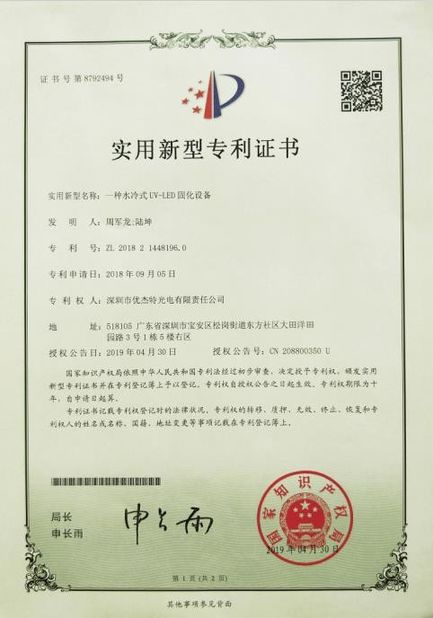
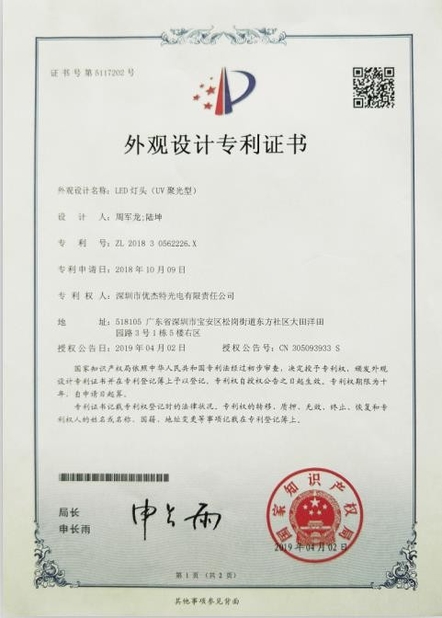
Global Support & Compliance: Fully certified systems built for 24/7 industrial environments.
Are you struggling with heat deformation, slow curing times, or rising energy costs in your flexible electronics assembly? Let our experts design a custom UV LED solution for your business.
👉 [Contact Our Engineers] | 📧ericuvled@szmylighting.com | 🌐 [https://www.uv-ledcuring.com]