logo
Home News

company news about 365nm vs 385nm vs 395nm: Which wavelength is best suited for your curing process?

Certification
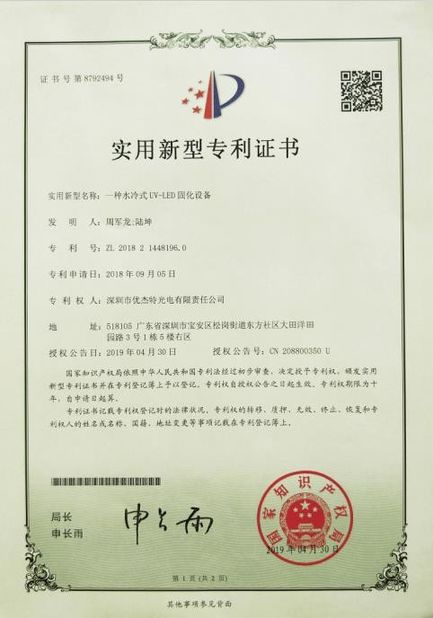
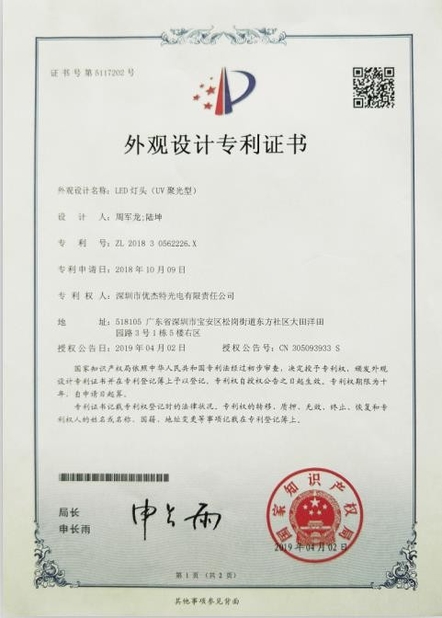
China Shenzhen Super- curing Opto-Electronic CO., Ltd certification
Customer Reviews
We have cooperation for long long time ,it's a good experience .

—— Mike

Sincerely hope to we can cooperation next time soon.

—— Bok

I like your leduv flashlight very much it's hand-held and operation very easy.

—— Christophe

The UV lamp greatly improves the efficiency of our screen printing machine, it's great!

—— Alfie

The UV Curing Unit quality is excellent; I've used it for over a year without any problems.

—— Oliver

This lamp is perfect for curing silkscreen printing on our packaging. I love it.

—— Ethan

I'm Online Chat Now
Company News
365nm vs 385nm vs 395nm: Which wavelength is best suited for your curing process?
Latest company news about 365nm vs 385nm vs 395nm: Which wavelength is best suited for your curing process?

365nm vs 385nm vs 395nm: Which wavelength is best suited for your curing process?

In the process of UV LED curing technology replacing traditional mercury lamps, one of the most perplexing questions for engineers is: "Which wavelength should I choose?" Although they all appear as violet light to the naked eye, at the molecular level, the subtle nanometer-level differences between 365nm, 385nm, and 395nm often determine the curing quality, production speed, and even yield of the product. This article will provide an in-depth analysis of the characteristics and application scenarios of these three mainstream wavelengths.

1. Core Differences: Surface Curing vs. Deep Penetration

To understand wavelength selection, we must first understand the performance of UV energy in coatings.

Short wavelengths (365nm): Carry higher photon energy. They are easily absorbed by material surfaces, making them the king of surface curing. They quickly eliminate the tack-free feel of surfaces, resulting in a high-gloss coating.

Long wavelengths (385nm/395nm): Lower energy but stronger penetrating power. They easily penetrate thicker or highly pigmented ink layers, reaching the bottom and ensuring deep adhesion (Through Curing).

2. Detailed Analysis of Three Mainstream Wavelengths

365nm: The "Scalpel" of Precision Curing

365nm is the wavelength closest to the peak value of traditional mercury lamps.

Advantages: Extremely fast surface drying speed, effectively preventing oxygen inhibition.

Best Scenarios:

  • Optical Adhesives (LOCA): Requires extremely high transparency and no yellowing.
  • Thin Film Coating: For heat-sensitive materials, 365nm can complete surface drying in a very short time, reducing thermal deformation.
  • Microelectronics Assembly: Precision dispensing and curing.

385nm: The Balanced "All-Round Performer"

385nm is between the two, a compromise that balances surface drying and deep curing.

Advantages: Better surface curing performance than 395nm, and stronger penetration of thick coatings than 365nm.

Best Scenarios:

  • 3D Printing (Photopolymerization): Ensures adhesion between layers.
  • Specialty Inks: For industrial coatings with specific formulations.

395nm/405nm: The "Heavy Tank" of Industrial Printing

These are currently the most widely used wavelengths in mass industrial production.

Advantages: Extremely strong penetration, and the most mature LED chip technology, resulting in the highest light power output (more UV energy generated for the same power consumption).

Best Applications:

  • Inkjet Printing: Especially for black, white, or metallic inks containing high pigment content.
  • Wood Coating: Adhesion to the bottom of thick paint layers.
  • Screen Printing: Curing large-area, high-concentration coatings.

3. How to Make the Final Choice for Your Process?

Before deciding to purchase a UV LED curing lamp, check the following three dimensions:

  1. For coating thickness > 50μm, choose 395nm to ensure bottom curing and prevent peeling.
  2. For coating color (dark/high opacity), choose 395nm; the longer wavelength can "bypass" pigment particles.
  3. For high transparency/anti-yellowing requirements, choose 365nm; the concentrated energy reduces the long-wave heat effect on the substrate.
  4. For high surface hardness/scratch resistance requirements, choose 365nm for rapid cross-linking of surface molecules.

In some complex industrial scenarios, a single wavelength may not be sufficient to perfectly solve the problem. For example, in high-speed label printing, we often recommend a hybrid approach of "365nm + 395nm": using 365nm for surface drying and 395nm to ensure strong adhesion between the ink and the substrate.

The choice of wavelength depends not only on the lamp but also on your photoinitiator formulation. Before placing an order, please consult your ink supplier or contact our technical team for mixing tests.

Want more professional selection advice?

We at Shenzhen Super-curing Opto-Electronic CO., Ltd. can provide you with:

  • Free laboratory sample testing: Send us your substrate, and we will match the best solution for you.
  • Customized multi-wavelength modules: Spectra tailored to specific processes.
Pub Time : 2026-03-10 15:32:12 >> News list
Contact Details
Shenzhen Super- curing Opto-Electronic CO., Ltd

Contact Person: Mr. Eric Hu

Tel: 0086-13510152819

Send your inquiry directly to us (0 / 3000)