logo
Home News

company news about A Complete Guide to Selecting Industrial UV LED Curing Equipment

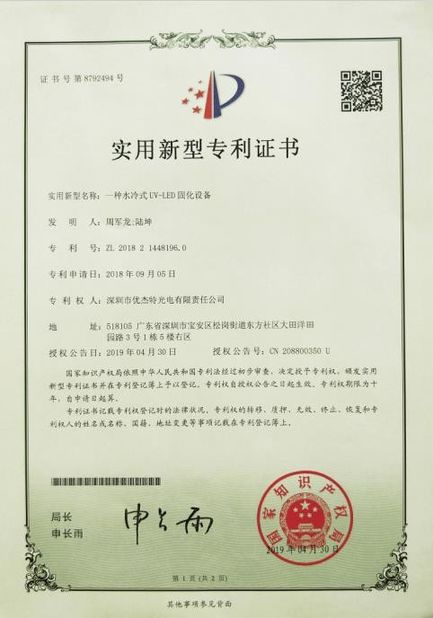
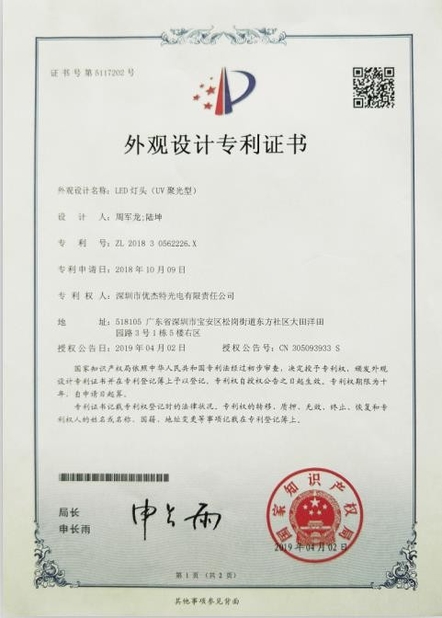
Certification
China Shenzhen Super- curing Opto-Electronic CO., Ltd certification
Customer Reviews
We have cooperation for long long time ,it's a good experience .

—— Mike

Sincerely hope to we can cooperation next time soon.

—— Bok

I like your leduv flashlight very much it's hand-held and operation very easy.

—— Christophe

The UV lamp greatly improves the efficiency of our screen printing machine, it's great!

—— Alfie

The UV Curing Unit quality is excellent; I've used it for over a year without any problems.

—— Oliver

This lamp is perfect for curing silkscreen printing on our packaging. I love it.

—— Ethan

I'm Online Chat Now
Company News
A Complete Guide to Selecting Industrial UV LED Curing Equipment
Latest company news about A Complete Guide to Selecting Industrial UV LED Curing Equipment
A Complete Guide to Selecting Industrial UV LED Curing Equipment

In the 2026 industrial landscape, UV LED curing technology has achieved a complete "generational leap" over traditional mercury lamps. From semiconductor micro-assembly to new energy battery encapsulation, from high-speed flexible printing to medical device bonding, UV LEDs are no longer just a "light source," but a key process variable in precision manufacturing. Shenzhen Super-curing Opto-Electronic CO., Ltd. aims to reveal the core architecture, key indicators, and selection pitfalls of modern UV curing equipment.

A high-performance industrial UV LED curing system is not simply a collection of LED chips; it is a sophisticated system involving optics, thermal engineering, electronics, and materials science.

  • LED Array: The carrier of core wavelengths (e.g., 365nm, 385nm, 395nm, 405nm). Cutting-edge technology in 2026 has already doubled the power density of a single chip.
  • Optical Design: Contains quartz lenses, reflectors, or optical fibers. Its function is to focus scattered light into parallel light or a high-energy focusing band, directly determining the uniformity of illumination.
  • Thermal Management: Although LEDs have high electro-optical conversion efficiency, approximately 70% is still converted into heat. The stability of the water-cooling system or efficient air-cooling determines the light decay rate and lifespan of the LED chips.
  • Smart Driver: Responsible for constant current control, dimming ratio (PWM) adjustment, and real-time data communication with the host computer MES system.

Under the market standards of 2026, evaluating equipment quality will no longer focus on simple "wattage," but rather on the following in-depth indicators:

  1. Irradiance – Unit: W/cm^2. This represents the "instantaneous burst" of light energy. High intensity ensures rapid initiator reaction, especially on high-speed production lines; insufficient intensity leads to poor surface drying.
  2. Energy Density – Unit: J/cm^2. This is the integral of intensity over time. It represents the "total energy" required for the chemical reaction. Energy (J/cm^2) = Irradiance (W/cm^2) * Time (s)
  3. Spectral Accuracy and Half-Wavewidth (FWHM). Curing adhesives in 2026 are extremely sensitive to wavelength. High-quality equipment can control the half-wavewidth within 5nm, ensuring that energy precisely falls on the ink's absorption peak, reducing thermal byproducts.
  4. Heat Dissipation and Temperature Rise Control. Excellent equipment can control the chip junction temperature within the ideal range. For every 10°C decrease in junction temperature, the lifespan of an LED can be significantly extended.

As manufacturers, we advise customers to focus on the following three points when purchasing, rather than simply comparing prices:

  • Shift from "Purchase Cost" to "Holding Cost": Inexpensive equipment experiences extremely rapid light decay; after six months, its output may only be 50%. Choosing equipment with light intensity closed-loop compensation technology ensures consistent output quality for several years.
  • Compatibility and Flexibility: Does your equipment support quick lens replacement to change the focal length? Can it work in conjunction with robotic arms? Factories in 2026 need modular equipment that can be upgraded along with the production line.
  • Intelligent Interfaces: Does it have remote monitoring, lifespan warnings, and I/O communication? In a smart factory environment, equipment that cannot connect to the network is an "information silo."
Pub Time : 2026-03-06 16:33:38 >> News list
Contact Details
Shenzhen Super- curing Opto-Electronic CO., Ltd

Contact Person: Mr. Eric Hu

Tel: 0086-13510152819

Send your inquiry directly to us (0 / 3000)