logo
Home News

company news about Deep curing vs. surface drying: How to ensure complete curing of UV adhesive by adjusting the UV lamp power?

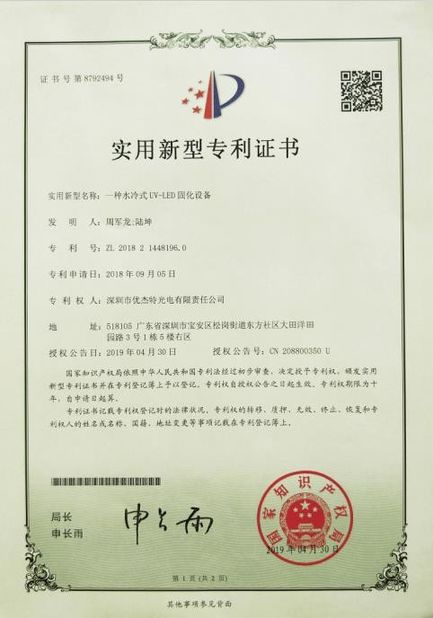
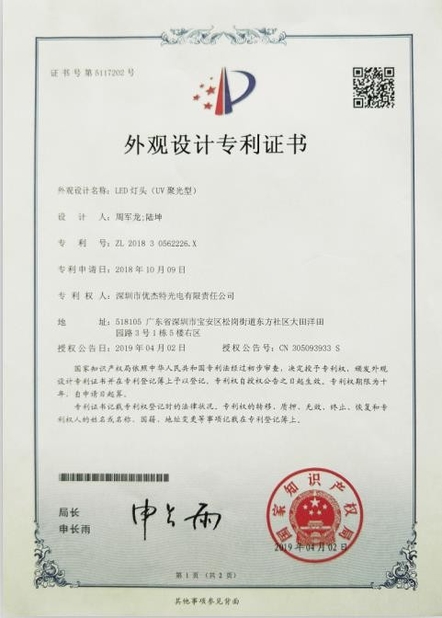
Certification
china Shenzhen Super- curing Opto-Electronic CO., Ltd certification
Customer Reviews
We have cooperation for long long time ,it's a good experience .

—— Mike

Sincerely hope to we can cooperation next time soon.

—— Bok

I like your leduv flashlight very much it's hand-held and operation very easy.

—— Christophe

The UV lamp greatly improves the efficiency of our screen printing machine, it's great!

—— Alfie

The UV Curing Unit quality is excellent; I've used it for over a year without any problems.

—— Oliver

This lamp is perfect for curing silkscreen printing on our packaging. I love it.

—— Ethan

I'm Online Chat Now
Company News
Deep curing vs. surface drying: How to ensure complete curing of UV adhesive by adjusting the UV lamp power?
Latest company news about Deep curing vs. surface drying: How to ensure complete curing of UV adhesive by adjusting the UV lamp power?
Deep curing vs. surface drying: How to ensure complete curing of UV adhesive by adjusting the UV lamp power?

In the field of UV curing, many manufacturers often encounter this dilemma: "The adhesive surface feels dry to the touch, but when you pry it open with a little force, the underlying layer is still runny." This phenomenon not only leads to a loss of bond strength but can also cause adhesive overflow or yellowing in the later stages of product development. To solve this problem, we need to deeply understand the delicate balance between "surface drying" and "deep curing," and how to achieve perfect curing by scientifically adjusting the UV lamp power.

I. The "Game" Between Surface Drying and Deep Curing

The curing process of UV adhesives is essentially a process in which photoinitiators absorb ultraviolet light energy, initiating monomer polymerization.

Surface Drying (Surface Dry): Ultraviolet light irradiates the adhesive surface. Because oxygen inhibits curing (oxygen inhibition), the surface typically requires a high light power density (intensity) to instantly activate enough initiators to counteract the effects of oxygen and achieve a dry feel.

Deep Curing (Inner Dry): Ultraviolet light must penetrate the adhesive layer to reach the bottom. However, pigments, fillers, and even the photoinitiators themselves in the adhesive absorb or scatter ultraviolet light. If the surface absorbs too much energy, the light energy reaching the bottom will be drastically reduced.

II. Why doesn't simply "increasing the power" solve the problem?

Many operators believe that "incomplete drying means insufficient power," so they blindly increase the UV lamp output. However, this often backfires:

  • Surface Over-curing: Excessive power causes an instantaneous film to form on the surface, creating a "shielding effect" that hinders further penetration of ultraviolet rays.
  • Heat Damage: Excessive power generates a large amount of infrared heat, causing deformation of substrates such as acrylic and plastic, or excessive internal stress in the adhesive.
  • False Drying: The surface appears perfect, but the internal adhesive remains in a "jelly-like" state due to insufficient energy, causing the product to peel off after a period of use.
III. How to Scientifically Adjust Power to Ensure "Complete Curing"?

To achieve comprehensive curing from the inside out, it is recommended to adjust the power in the following three dimensions:

  1. Finding the Balance Point of "Low Intensity, Long Duration"
    For thicker adhesive layers (e.g., 3mm or more), high-intensity instantaneous irradiation is often less effective than medium-low intensity irradiation with appropriately extended irradiation time. Allow sufficient time for the ultraviolet light to penetrate the underlying layer, ensuring that the accumulated radiant energy (joules/cm²) reaches the adhesive's curing threshold.
  2. Matching the Wavelength Characteristics of the Adhesive
    • 365nm Wavelength: Strong penetration, suitable for deep curing.
    • 395nm/405nm Wavelength: Concentrated energy, suitable for overcoming oxygen inhibition and improving surface drying. Adjustment Recommendation: If deep curing is inadequate, check if the UV lamp's spectrum includes a sufficiently long wavelength of ultraviolet light and ensure the lamp head height is at the optimal focal length.
  3. Staged Curing Strategy
    For precision assembly, a "pre-curing + main curing" model can be adopted:
    • Step 1: Use low power for a short time to irradiate the adhesive, allowing it to initially position and begin reacting from the inside out.
    • Step 2: Use standard power for the main irradiation to complete the final sealing. This method effectively reduces internal stress and ensures consistent curing levels inside and out.

In actual production, determining whether the adhesive has fully cured should not rely solely on touch. The following quantitative methods are recommended:

  • Use an energy meter: Regularly measure the actual energy received by the adhesive substrate, rather than just looking at the percentage displayed on the UV lamp control panel.
  • Hardness test: Use a Shore hardness tester to measure the hardness of the cured adhesive and compare the hardness difference between the surface and the substrate.
  • Peel test: Destructively test the bonded parts to observe whether the fracture occurs at the edge of the substrate or within the adhesive.

UV curing is not simply about "lighting up," but rather a precise management of energy. By scientifically adjusting the power and irradiation strategy of the UV lamps, manufacturers can not only solve the persistent problem of "dry inside but not outside," but also significantly improve product yield and lifespan.

Shenzhen Super-curing Opto-Electronic CO., Ltd. has been deeply involved in UV curing technology for many years. Our intelligent curing system supports multi-stage precise power adjustment, helping you overcome the curing challenges of various thick adhesives and specialty glues.

Pub Time : 2026-01-13 11:19:16 >> News list
Contact Details
Shenzhen Super- curing Opto-Electronic CO., Ltd

Contact Person: Mr. Eric Hu

Tel: 0086-13510152819

Send your inquiry directly to us (0 / 3000)