logo
Home News

company news about How to maintain the stability of a UV curing system in high-temperature environments?

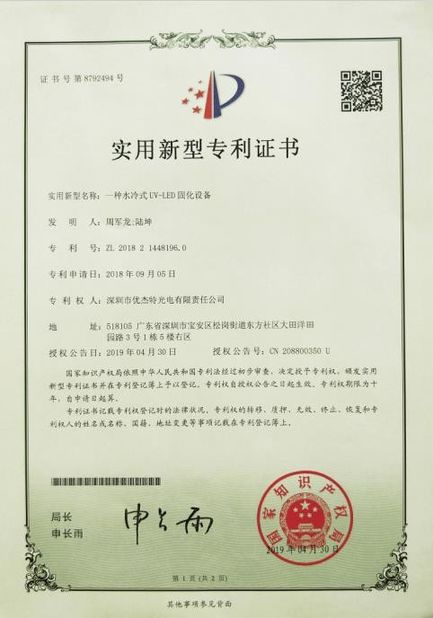
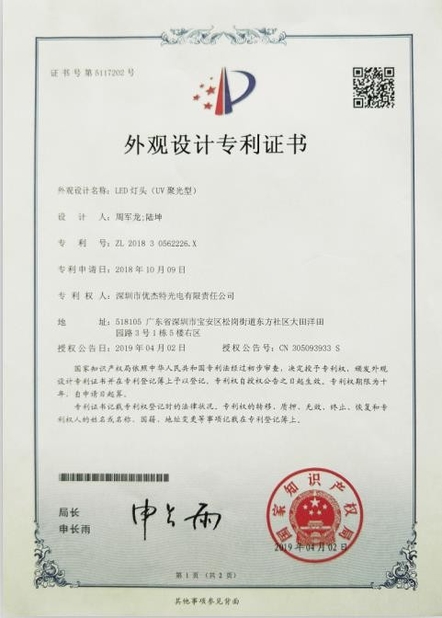
Certification
China Shenzhen Super- curing Opto-Electronic CO., Ltd certification
Customer Reviews
We have cooperation for long long time ,it's a good experience .

—— Mike

Sincerely hope to we can cooperation next time soon.

—— Bok

I like your leduv flashlight very much it's hand-held and operation very easy.

—— Christophe

The UV lamp greatly improves the efficiency of our screen printing machine, it's great!

—— Alfie

The UV Curing Unit quality is excellent; I've used it for over a year without any problems.

—— Oliver

This lamp is perfect for curing silkscreen printing on our packaging. I love it.

—— Ethan

I'm Online Chat Now
Company News
How to maintain the stability of a UV curing system in high-temperature environments?
Latest company news about How to maintain the stability of a UV curing system in high-temperature environments?
How to maintain the stability of a UV curing system in high-temperature environments?

In industrial production, UV curing systems often need to operate in harsh, continuous environments. However, heat is both a byproduct of curing and a major enemy of system stability. Excessively high ambient temperatures or poor heat dissipation can drastically reduce the lifespan of UV lamps, deform reflectors, and even cause frequent power supply trips and shutdowns.

As a professional UV curing system manufacturer, we have summarized the following four core strategies to help your production line remain rock-solid even under high-temperature conditions.

  1. Optimizing the Cooling System's "Internal Circulation" and "External Balance": The cooling system is the core of UV equipment's heat dissipation. Different strategies are needed for different types of light sources:
    Mercury Lamp System (Air-cooled/Water-cooled): Stable fan pressure must be ensured. Excessive airflow will cause overcooling of the lamp tube, leading to unstable arcing; insufficient airflow will cause the lamp tube to "crash" or the casing to melt.
    UV LED System: LEDs are extremely sensitive to temperature. We recommend using high-precision water-cooling units to control the chip junction temperature within the optimal range of 40°C to 60°C. This effectively prevents light decay and extends the equipment's lifespan to over 20,000 hours.
  2. Using Nanoscale Coated Cold Mirrors: In traditional mercury lamp curing, a significant portion of the heat generated is from infrared (IR) radiation. Technical Solution: We recommend using a cold mirror coating on the reflector surface. This coating reflects over 90% of ultraviolet radiation while allowing infrared radiation to pass through and be carried away by the cooling system at the back.
    Result: The surface temperature of the irradiated area can be reduced by 30% to 50%, effectively protecting heat-sensitive materials such as plastic films from deformation.
  3. Real-time Monitoring of the Intelligent Power Management System
    High-temperature environments also pose a significant challenge to the drive power supply (ballast).
    Automatic Power Adjustment: The intelligent UV power supply should have a "temperature compensation" function. When the sensor detects that the lamp box temperature exceeds the safety threshold, the system should automatically fine-tune the output power instead of shutting down directly, thereby ensuring production continuity.
    Remote Diagnostics: Through integrated sensors, you can monitor the current, voltage, and temperature curves of each group of lamps in real time in the background, enabling preventative maintenance before faults occur.
  4. Material Selection Details: High-Temperature Resistant Wiring and Ceramic Base
    Many system failures do not originate from the lamp tubes, but from small components. High-temperature, high-voltage resistant wiring made of Teflon (PTFE) or high-purity silicone is used. High-quality silver-plated ceramic electrode bases are used at the connections to prevent poor contact caused by oxidation, which is especially important in humid or high-temperature factory environments.

Stability in high-temperature environments is not achieved through a single component, but rather through a systematic engineering approach encompassing heat dissipation design, optical control, and intelligent monitoring. Choosing a supplier with deep customization capabilities allows your factory to maintain high-efficiency production even under extreme weather conditions and demanding work schedules.

If you are looking for UV curing solutions for specific high-temperature applications (such as paint drying lines and PCB manufacturing), click on the company Shenzhen Super-curing Opto-Electronic CO., Ltd. Our technical engineers will provide you with a free system assessment and cooling optimization plan.

Pub Time : 2026-03-16 09:42:30 >> News list
Contact Details
Shenzhen Super- curing Opto-Electronic CO., Ltd

Contact Person: Mr. Eric Hu

Tel: 0086-13510152819

Send your inquiry directly to us (0 / 3000)