logo
Home News

company news about Hydrogel UV curing: A key technology for rapid prototyping and biomedical applications

Certification
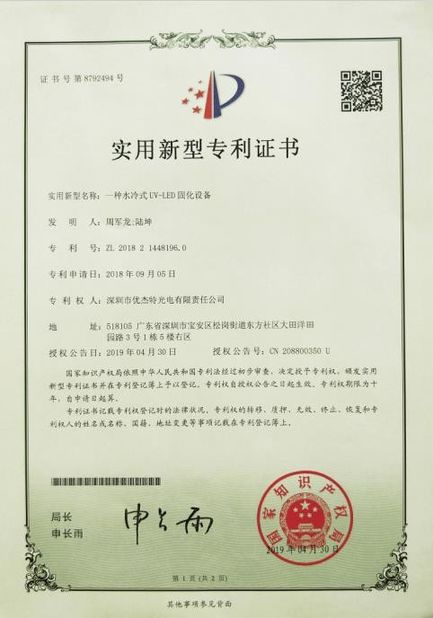
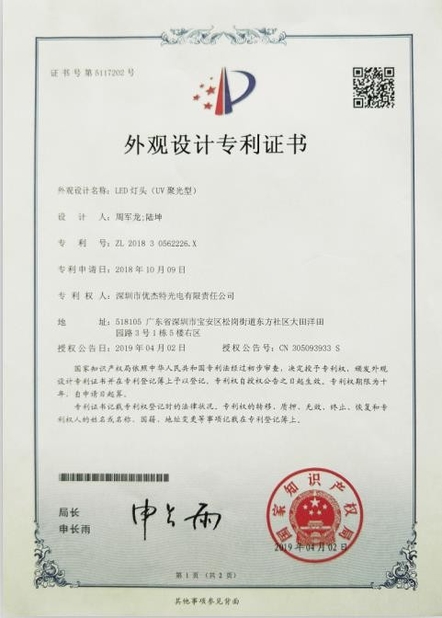
China Shenzhen Super- curing Opto-Electronic CO., Ltd certification
Customer Reviews
We have cooperation for long long time ,it's a good experience .

—— Mike

Sincerely hope to we can cooperation next time soon.

—— Bok

I like your leduv flashlight very much it's hand-held and operation very easy.

—— Christophe

The UV lamp greatly improves the efficiency of our screen printing machine, it's great!

—— Alfie

The UV Curing Unit quality is excellent; I've used it for over a year without any problems.

—— Oliver

This lamp is perfect for curing silkscreen printing on our packaging. I love it.

—— Ethan

I'm Online Chat Now
Company News
Hydrogel UV curing: A key technology for rapid prototyping and biomedical applications
Latest company news about Hydrogel UV curing: A key technology for rapid prototyping and biomedical applications
Hydrogel UV curing: A key technology for rapid prototyping and biomedical applications

Hydrogels are hydrophilic materials with a three-dimensional cross-linked polymer network structure that can absorb and retain large amounts of water without dissolving. They are structurally and mechanically similar to human soft tissue, thus possessing enormous application potential in biomedicine, tissue engineering, drug delivery, and soft robotics. UV curing technology, due to its advantages of fast curing speed, mild process, and high spatial controllability, has become one of the core technologies in the precision manufacturing and rapid prototyping of hydrogels.

The process of UV-curing hydrogels is essentially a photochemical crosslinking reaction, typically completed within seconds. This process requires the synergistic action of three key components:

  1. The base material of the hydrogel, the prepolymer, must contain photocrosslinking groups that can be activated by a photoinitiator, such as acrylate or methacrylate groups. Common photocrosslinkable biomaterials include: GelMA (methacrylamide gelatin): possessing good bioactivity and suitable for cell culture; PEGDA (polyethylene glycol diacrylate): simple to synthesize and allowing for precise control of material properties; and HAMA (methacrylamide hyaluronic acid): a natural extracellular matrix (ECM) component with high biocompatibility.
  2. The photoinitiator is the "switch" in the curing process. It absorbs specific wavelengths of ultraviolet (UV) light and rapidly decomposes to produce highly reactive free radicals or cations. In biological applications, photoinitiators must have good water solubility and low cytotoxicity, such as the commonly used Irgacure 2959 (I-2959).
  3. UV Light Source and Curing When a UV light source (usually a UV LED, such as a wavelength of 365 nm or 405 nm) irradiates a prepolymer solution premixed with a photoinitiator, the photoinitiator is activated, and the generated active species then initiate the polymerization reaction of the crosslinking groups on the prepolymer to form a stable three-dimensional network structure—that is, a hydrogel.

UV-cured hydrogels have become a mainstream technology because they offer unparalleled advantages over traditional crosslinking methods:

  • Rapid Molding and Efficiency: Curing time is typically between 1 and 60 seconds, significantly increasing manufacturing throughput.
  • Gentle Crosslinking Conditions (Cold Curing): UV LEDs are cold light sources, allowing curing to occur at room temperature or near physiological temperature (37 degrees Celsius), maximizing the protection of the activity and survival rate of living cells and bioactive molecules encapsulated within the hydrogel.
  • Precise Performance Control: By adjusting the intensity and duration of UV light irradiation (i.e., light dose), the crosslinking density of the hydrogel can be precisely controlled. Higher crosslinking density results in a higher Young's modulus (mechanical hardness), crucial for simulating the mechanical environments of different human tissues.
  • High Spatial Resolution: UV light can be precisely patterned, focused, and scanned to achieve micron-level structure fabrication, a feat difficult to achieve with traditional casting methods.

UV curing technology is used to precisely construct hydrogel channels, valves, or membrane structures on microfluidic chip substrates. These structures can be used to separate and mix trace fluids, or as environmentally sensitive biosensors, playing a role in bioanalysis and diagnostics.

Leveraging the high spatial resolution and rapid prototyping characteristics of UV curing, hydrogels have become the basis for "bioinks" in photopolymer 3D printing (such as DLP/SLA). They can be used to construct complex, multi-layered cell scaffolds, precisely mimicking the microenvironment of natural tissues, for research on the regeneration of tissues such as bone, cartilage, and blood vessels.

UV curing technology for hydrogels has become an indispensable part of modern biomaterials science and engineering. It perfectly combines the speed of chemical crosslinking with the precision of optical technology, providing a powerful, flexible and bio-friendly manufacturing platform for developing next-generation hydrogel materials with customized mechanical properties, bioactivity and complex microstructures.

Pub Time : 2025-12-10 10:09:55 >> News list
Contact Details
Shenzhen Super- curing Opto-Electronic CO., Ltd

Contact Person: Mr. Eric Hu

Tel: 0086-13510152819

Send your inquiry directly to us (0 / 3000)