logo
Home News

company news about UV Curing Trap: Why does the cross-cut adhesion test still peel off even when the surface is completely dry?

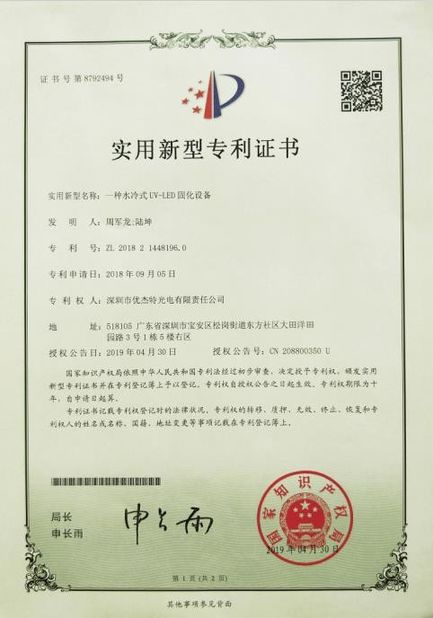
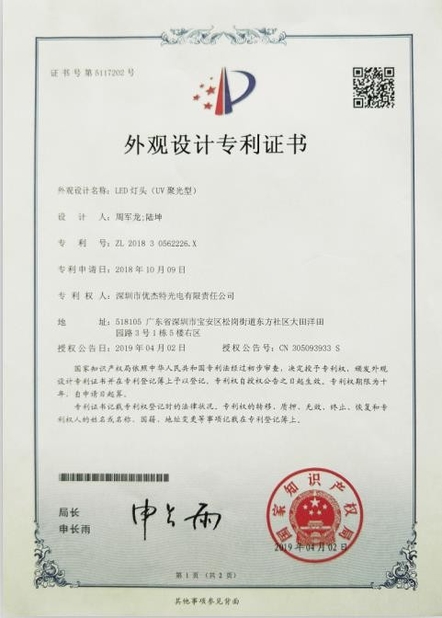
Certification
China Shenzhen Super- curing Opto-Electronic CO., Ltd certification
Customer Reviews
We have cooperation for long long time ,it's a good experience .

—— Mike

Sincerely hope to we can cooperation next time soon.

—— Bok

I like your leduv flashlight very much it's hand-held and operation very easy.

—— Christophe

The UV lamp greatly improves the efficiency of our screen printing machine, it's great!

—— Alfie

The UV Curing Unit quality is excellent; I've used it for over a year without any problems.

—— Oliver

This lamp is perfect for curing silkscreen printing on our packaging. I love it.

—— Ethan

I'm Online Chat Now
Company News
UV Curing Trap: Why does the cross-cut adhesion test still peel off even when the surface is completely dry?
Latest company news about UV Curing Trap: Why does the cross-cut adhesion test still peel off even when the surface is completely dry?
UV Curing Trap: Why does the cross-cut adhesion test still peel off even when the surface is completely dry?

In the field of UV curing, the most common misjudgment is that the film layer is not sticky to the touch, meets the hardness standard, and has a perfect appearance, but peels off easily during the cross-cut adhesion test.

Many people are accustomed to judging success or failure by "surface dryness," believing that dryness means it is cured. However, "film formation" and "adhesion" are actually two different things. A non-sticky surface only proves that the cross-linking reaction has been completed, while the cross-cut adhesion test examines the interfacial bonding strength between the coating and the substrate.

Here are four core reasons for "surface drying, substrate peeling":
  • Superficial but not penetrating: The coating merely forms a nice "skin" on the surface, but due to low surface energy or poor wettability of the substrate, it fails to truly penetrate into the substrate structure.
  • Too rapid curing: It's not that curing is insufficient, but rather that the reaction is too fast. The highly reactive system quickly locks in the structure, prematurely cutting off the interfacial bonding channels before the coating can even "hold" the substrate.
  • Volume shrinkage stress: UV polymerization is accompanied by severe shrinkage. If the shrinkage stress exceeds the interfacial bonding force, the film will generate internal stress, forcibly "pulling" itself off the substrate.
  • Pretreatment illusion: Hidden contaminants such as oil, release agents, or corona decay do not affect surface drying but directly damage interfacial adhesion. You are not measuring adhesion, but cleanliness.

A mature UV process should not only focus on the gloss and feel of the "top," but also study the interfacial relationships of the "bottom." Do not blindly increase the curing energy, because the problem is often not that it is "not completely dry," but that it is "not properly controlled."

For more information or to ask questions, please contact Shenzhen Super-curing Opto-Electronic CO., Ltd.

Pub Time : 2026-03-31 09:32:22 >> News list
Contact Details
Shenzhen Super- curing Opto-Electronic CO., Ltd

Contact Person: Mr. Eric Hu

Tel: 0086-13510152819

Send your inquiry directly to us (0 / 3000)