Why Dual-Curing Systems Are Overcoming the Greatest Limitation of UV Curing
The most compelling advantage of UV (Ultraviolet) light-curing technology is, without a doubt, its speed.
The moment a precision-calibrated UV light hits the substrate, adhesives, coatings, and inks undergo rapid polymerization within seconds. For high-volume manufacturing industries—such as micro-electronics assembly, medical device fabrication, automotive component production, display module bonding, and precision optoelectronics—this "instant positioning, rapid line clearance, and fast cycle times" approach is a game-changer.
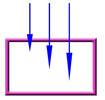
However, standard UV curing possesses a natural, inescapable limitation: It is entirely dependent on a direct line of sight.
Where light penetrates, curing efficiency is flawless. But where light cannot reach, severe quality vulnerabilities arise. In today's advanced industrial designs, this bottleneck is expanding rapidly, driving the widespread adoption of Dual-Curing Systems (Hybrid Curing Technology) as the new industry benchmark.
The Core Challenge: The Shadow Zone Bottleneck
As modern components shrink in size, assembly tolerances become narrower, layered materials multiply, and non-transmissive (opaque) substrates become the norm.
When UV adhesives are dispensed into these intricate assemblies, a critical problem occurs: the exposed surface fillets and edges cure and fix the parts instantly, but the interior matrix, base layers, deep channels, and overlapping joints remain completely uncured.
This is the infamous "Shadow Zone" or "Blind Spot" dilemma of optical curing. Because traditional UV light cannot bend around corners or penetrate opaque barriers (like metals, dark plastics, or UV-blocked materials), simply extending the exposure time or increasing the lamp wattage is mathematically useless.
Left untreated, these uncured adhesive pockets lead to outgassing, localized stress concentrations, fluid migration, and early structural delamination under mechanical load or environmental thermal cycling.
The Breakthrough Solution: Why Dual-Curing Systems Are the New Hotspot
To eliminate the shadow-zone vulnerability while retaining the high-speed advantages of light-curable chemistry, modern material science introduced Dual-Curing (Hybrid) mechanisms.
Dual-curing adhesives incorporate two independent, distinct chemical polymerization triggers within a single formulation. The process perfectly balances production speed with long-term reliability:
1. UV + Moisture Curing (Secondary Moisture Fix)
-
How It Works: The exposed edges and visible fillets are instantly polymerized by a 365nm/405nm LED lamp to lock the component geometry in place within 2 to 5 seconds. Over the next 24 hours, the adhesive trapped inside the dark shadow zones reacts naturally with ambient atmospheric moisture to complete full cross-linking.
-
Best Used For: Automated automotive electronics encapsulation, sensor potting, and connector sealing.
2. UV + Thermal Curing (Secondary Bake Fix)
-
How It Works: UV light provides the initial precision positioning to hold tight sub-micron tolerances, preventing part shifting. The assembly then passes through an inline infrared (IR) or convection tunnel oven. The heat triggers thermal initiators, fully curing the adhesive hidden beneath completely opaque metallic or ceramic shielding.
-
Best Used For: Smartphone camera module active alignment, optical lenses, and semiconductor packaging.
3. UV + Anaerobic Curing (Secondary Metal-Contact Fix)
-
How It Works: The perimeter is flash-cured by UV light. Inside the joint, where the adhesive is deprived of oxygen and in contact with metal ions (such as copper or iron), an anaerobic reaction takes over, hardening the core completely.
-
Best Used For: Threadlocking, cylindrical shaft joining, and coaxial mechanical assemblies.
Engineering Reality: UV for Speed, Secondary Cure for Security
The rapid rise of dual-curing systems is a direct response to stricter quality control (QC) and automated efficiency demands in the era of smart manufacturing.
By separating the manufacturing flow into two stages, dual-curing technology provides the ultimate hybrid benefit:
UV light provides the SPEED (second-level fixturing to maximize factory throughput and stop component shifting), while the secondary curing mechanism provides the SECURITY (eliminating hidden shadow-zone flaws to guarantee long-term field reliability).
Before setting up your high-volume automated production line, consult with a process engineer to establish a tailored curing window. This ensures that your selected dual-cure chemistry aligns flawlessly with your substrate transmission characteristics and the structural requirements of your final product.

 Your message must be between 20-3,000 characters!
 English