logo
Home Blog

blog about Advanced UV Curing Technology Transforms Industrial Manufacturing

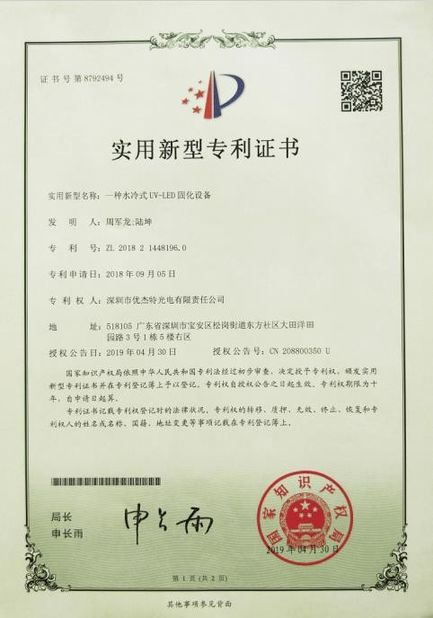
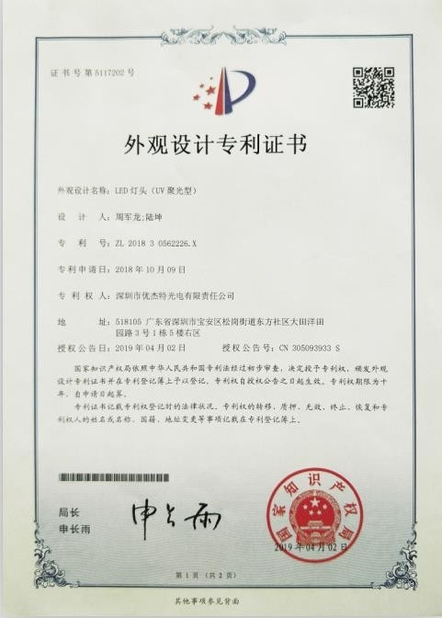
Certification
China Shenzhen Super- curing Opto-Electronic CO., Ltd certification
Customer Reviews
We have cooperation for long long time ,it's a good experience .

—— Mike

Sincerely hope to we can cooperation next time soon.

—— Bok

I like your leduv flashlight very much it's hand-held and operation very easy.

—— Christophe

The UV lamp greatly improves the efficiency of our screen printing machine, it's great!

—— Alfie

The UV Curing Unit quality is excellent; I've used it for over a year without any problems.

—— Oliver

This lamp is perfect for curing silkscreen printing on our packaging. I love it.

—— Ethan

The UV LED curing lamps from this company are incredibly stable. We use them for our touch-screen bonding line, and the curing consistency is perfect.

—— David

They customized the perfect 365nm UV curing solution for our automated optical manufacturing line.

—— Elena

I'm Online Chat Now
Company Blog
Advanced UV Curing Technology Transforms Industrial Manufacturing
Latest company news about Advanced UV Curing Technology Transforms Industrial Manufacturing

Ultraviolet curing technology is increasingly replacing traditional thermal curing in manufacturing, offering curing in seconds rather than minutes while reducing energy use and heat stress. As factories pursue higher throughput and more consistent product quality, the selection, operation and maintenance of UV curing systems have become central to production planning.

How UV curing works and why it matters

UV curing relies on photopolymerization. When a UV-curable coating, ink or adhesive containing a photoinitiator is exposed to ultraviolet light at a specific wavelength, the photoinitiator absorbs the energy and triggers cross-linking between monomers and oligomers. The material then hardens almost instantly, eliminating the long bake cycles associated with conventional thermal processes.

The result is a faster production rhythm and less dependence on large thermal ovens. Because the process is rapid and highly controllable, it can support both continuous manufacturing lines and precision assembly work.

Core operational benefits

  • Higher throughput: curing time falls from minutes to seconds, directly increasing line capacity.
  • Better energy efficiency: electricity consumption is reduced and large heat ovens are no longer required.
  • Improved product quality: durability, chemical resistance and surface finish can be enhanced.
  • Environmental advantages: most UV materials are solvent-free formulations, helping to lower volatile organic compound emissions.
  • Space savings: the absence of bulky drying zones reduces the factory footprint.

Selecting a UV curing system

Choosing the right UV curing equipment depends on the substrate, the formulation and the production environment. Equipment suppliers offer several broad categories, each with distinct technical characteristics and typical applications.

Equipment type Technical characteristics Typical applications
UV LED systems Narrow spectrum from 365 to 405 nm; high energy efficiency and very low heat Heat-sensitive substrates and intermittent production
Mercury lamp systems Broad spectrum output and high operating temperature Traditional industrial lines and thick-film curing
Conveyor systems Controlled speed and high consistency High-volume continuous production
Spot curing equipment Concentrated high energy and high precision Electronics assembly and precision bonding

In practice, the decision often turns on heat tolerance and formulation requirements. LED systems are suited to heat-sensitive components because they run cooler and can be switched on and off as needed. Mercury systems may remain appropriate for traditional thick-film coatings that require broad-spectrum output for thorough curing.

Safety and maintenance practices

UV curing equipment is efficient, but it requires strict safety controls. Operators should wear UV protective eyewear and protective clothing, and safety interlocks built into the equipment enclosure must not be bypassed. For mercury lamp systems, regular radiometer checks are recommended because lamp aging can cause curing deficiencies that are difficult to detect visually.

A preventive maintenance plan is equally important. Cleaning reflectors and shielding, monitoring intensity and following the manufacturer’s service schedule help maintain consistent performance over the life of the equipment. For processes that generate ozone or vapors, proper ventilation is also necessary, along with systematic operator training.

As manufacturers weigh faster curing against safety, energy and quality requirements, UV systems are likely to remain a significant part of industrial production planning. Their effectiveness depends less on speed alone than on matching the equipment to the material, the substrate and the operating environment.

Frequently Asked Questions

How should a manufacturer choose between a UV LED system and a mercury lamp system?
The choice depends mainly on substrate heat tolerance and formulation requirements. LED systems run at low temperatures and can be switched on and off immediately, making them suitable for heat-sensitive parts. Mercury systems may be needed for conventional thick-film coatings that require broad-spectrum output for complete curing.
Why can a UV-cured product appear dry on the surface while remaining undercured inside?
This is often related to wavelength matching or insufficient intensity. Operators should verify the wavelength requirements of the photoinitiator in the formulation, use a radiometer to check whether equipment output has declined, and confirm that reflectors have not accumulated curing residue.
Do UV curing systems require special safety configurations on a production line?
Yes. Equipment should have adequate shielding and safety interlocks. Processes that generate ozone or vapors also require professional ventilation, and operators should receive systematic training before working with the equipment.
Pub Time : 2026-10-20 00:00:00 >> Blog list
Contact Details
Shenzhen Super- curing Opto-Electronic CO., Ltd

Contact Person: Mr. Eric Hu

Tel: 0086-13510152819

Send your inquiry directly to us (0 / 3000)