logo
Home Blog

blog about Handheld UV LED Curing Systems Optimize Industrial Throughput

Certification
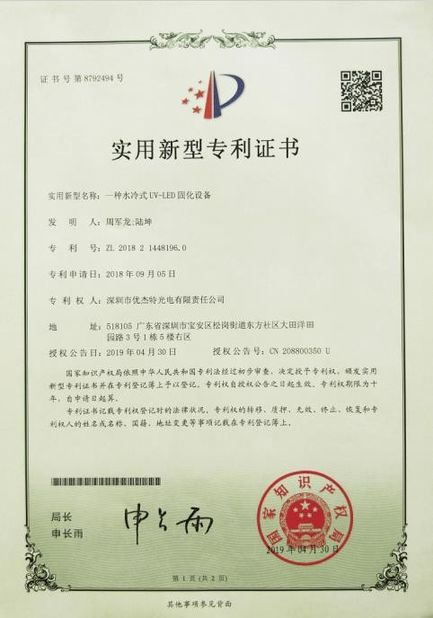
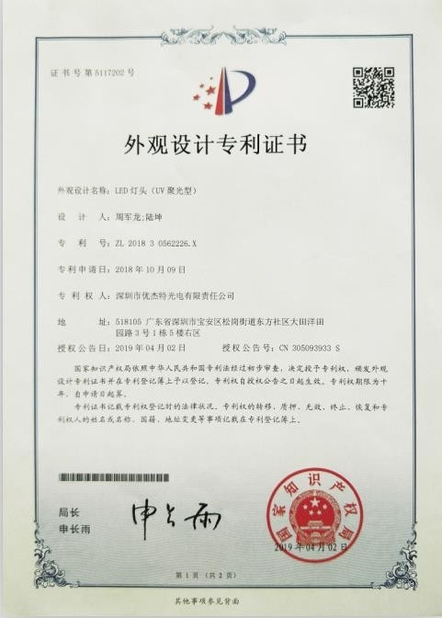
China Shenzhen Super- curing Opto-Electronic CO., Ltd certification
Customer Reviews
We have cooperation for long long time ,it's a good experience .

—— Mike

Sincerely hope to we can cooperation next time soon.

—— Bok

I like your leduv flashlight very much it's hand-held and operation very easy.

—— Christophe

The UV lamp greatly improves the efficiency of our screen printing machine, it's great!

—— Alfie

The UV Curing Unit quality is excellent; I've used it for over a year without any problems.

—— Oliver

This lamp is perfect for curing silkscreen printing on our packaging. I love it.

—— Ethan

The UV LED curing lamps from this company are incredibly stable. We use them for our touch-screen bonding line, and the curing consistency is perfect.

—— David

They customized the perfect 365nm UV curing solution for our automated optical manufacturing line.

—— Elena

I'm Online Chat Now
Company Blog
Handheld UV LED Curing Systems Optimize Industrial Throughput
Latest company news about Handheld UV LED Curing Systems Optimize Industrial Throughput

Handheld UV LED curing systems are emerging as a flexible option for industrial production lines where curing speed can affect overall delivery cycles. By using LED light sources to emit specific UV wavelengths, the devices can cure inks, coatings, adhesives and resins almost instantly, a capability that is changing workflows in printing, electronics assembly, automotive manufacturing and other fields.

Core advantages of UV LED curing

Compared with conventional curing methods, UV LED systems use LED light sources to emit specific UV wavelengths and cure inks, coatings, adhesives and resins in a near-instant process. That immediate-response characteristic compresses production time, improves energy efficiency and reduces the risk of heat damage to sensitive substrates.

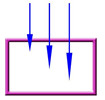
The approach is intended to improve throughput while limiting the thermal exposure often associated with conventional curing. Its output can be directed at the material surface, helping concentrate the curing effect where it is needed.

Industrial applications

Handheld UV LED curing systems are used across a range of industries because of their portability and performance. The main application areas are summarized below.

Industry Application focus
Printing Rapid drying of UV inks, varnishes and coatings
Electronics manufacturing PCB assembly, semiconductor packaging and bonding processes
Automotive Component coating, paint repair and protective coatings
Medical devices Precision device assembly and adhesive curing
3D printing Resin layer curing and model post-processing
Technical value and selection considerations

When selecting a handheld UV LED curing device, facilities should consider the match between the light source wavelength and the material being cured, along with ease of operation and durability in the specific production environment. For high-frequency industrial lines, heat dissipation design and light-intensity stability are key indicators for consistent curing results.

Wavelength matching is central because curing depends on how well a coating or adhesive absorbs UV energy at a given wavelength. In high-use settings, the device’s thermal management also affects whether output remains stable over extended operation.

Frequently Asked Questions
Is a handheld UV LED device suitable for all types of UV coatings?
No. Curing effectiveness depends on how well the coating formulation absorbs a specific UV wavelength. Before selection, users should confirm that the coating’s required wavelength range—such as 365 nm, 385 nm or 395 nm—matches the device’s output.
How can users determine whether curing is complete?
Full curing typically appears as a non-tacky surface, adequate hardness and good adhesion. Recommended practice includes measuring the actual UV intensity reaching the surface with a professional UV energy meter and testing in conjunction with the material’s technical documentation.
What should be considered during continuous operation?
Continuous operation requires attention to heat dissipation. Although LED sources generate less heat than traditional lamps, prolonged high-load use still requires adequate ventilation to prevent light-intensity degradation or damage to internal components.
Pub Time : 2026-10-20 00:00:00 >> Blog list
Contact Details
Shenzhen Super- curing Opto-Electronic CO., Ltd

Contact Person: Mr. Eric Hu

Tel: 0086-13510152819

Send your inquiry directly to us (0 / 3000)